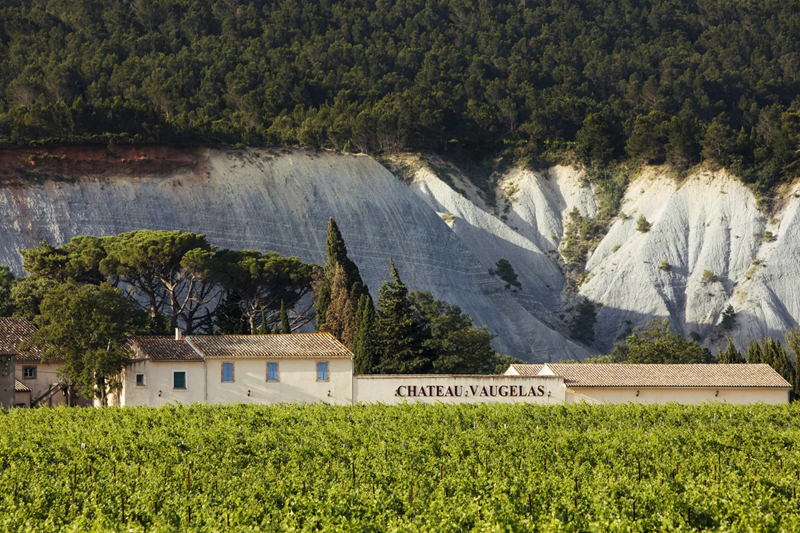
The winery boasts 72 hectares of contiguous vineyards surrounding the château, with no fragmented plots, facilitating meticulous and unified management across the entire estate. All plots are situated on gentle south-facing slopes at an altitude of 120-180 meters, ensuring ample sunlight and excellent drainage—ideal terrain for grape cultivation. The vineyard's soil structure is primarily composed of clay, limestone, and topsoil gravel, a hallmark of the Languedoc AOP terroir. The underlying limestone bedrock not only imparts a unique minerality and terroir memory to the grapes but also provides a stable supply of trace minerals essential for growth. The middle layer of clay possesses excellent water and fertilizer retention capabilities, ensuring a continuous and stable supply of water and nutrients to the vines during the hot, dry Mediterranean summers, preventing dehydration. The topsoil gravel provides excellent drainage, quickly removing excess water during the rainy season to prevent root rot. It also reflects sunlight, providing additional light to the base of the vines, raising the overall vineyard temperature, and promoting the perfect ripening of phenolic compounds and flavor compounds.
Climatically, the area enjoys a typical Mediterranean climate with over 2200 hours of sunshine annually. Dry summers and mild, wet winters, combined with stable diurnal temperature variations, allow the vines to complete their ripening cycle slowly and evenly. Unlike grapes grown in coastal areas, which are prone to overripeness and insufficient acidity, the winery leverages the altitude of its gentle slopes at high altitude to maximize the diurnal temperature range. This allows the grapes to accumulate abundant sugar and flavor compounds while locking in a delicate natural acidity. The resulting wines possess both the full-bodied fruitiness of Mediterranean wines and an elegant balance and structure, completely shedding the common stereotype of Southern French wines as "heavy and monotonous."
In terms of viticultural management, the winery consistently adheres to the Bonfis Group's sustainable farming philosophy, achieving HVE3 high environmental value certification in France, with its core plots holding organic farming certification. The vineyard strictly controls grape yields, keeping the yield per hectare far below the Languedoc AOP legal limit, ensuring the concentration of flavor in the fruit from the source. A high-cup pruning method, adapted to the Mediterranean climate, is used to reduce the risk of disease and ensure each bunch of grapes receives even and ample sunlight. The core grape varieties planted are Languedoc AOP legal red grapes such as Grenache, Cinsault, Syrah, and Mourvèdre, as well as white grape varieties such as Viognier and Grenache Blanc. All varieties have undergone decades of terroir acclimatization to maximize their aroma and flavor potential.