The history of Château Palmer dates back to the late 17th century, when it was known as "Domaine de Gascq" and managed by the Gascq family. In 1814, British Major General Charles Palmer purchased the estate from the Gascq family and named it after himself. For the next 30 years, Charles continuously expanded and modernized the estate, laying a solid foundation for Palmer's success. In 1843, due to debt problems, Charles sold the estate to the Caisse Hypothecaire de Paris bank.
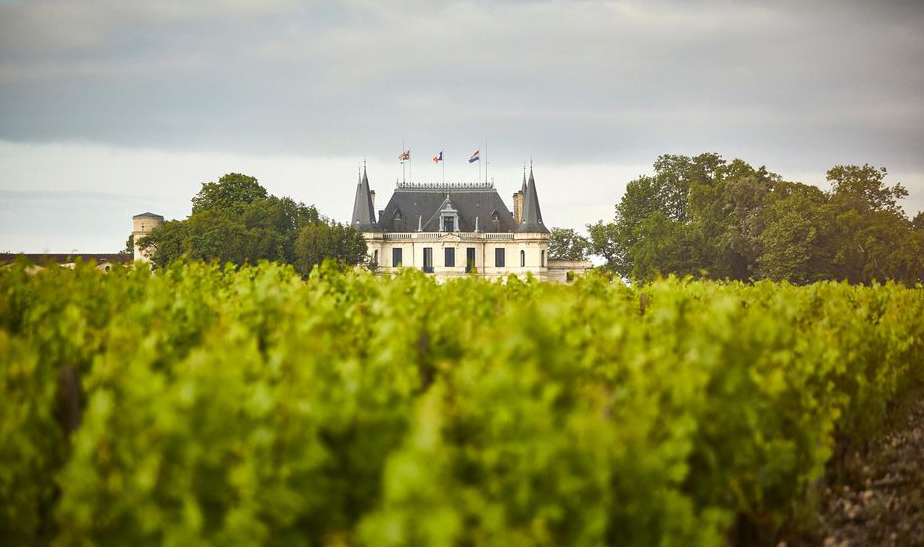
In June 1853, two prominent bankers from the Second French Empire, powerful rivals of the Rothschild family, Emile Pereire and Isaac Pereire, purchased Château Palmer at a high price. They subsequently redeveloped the vineyards and invested heavily in modernizing the estate, significantly enhancing its prestige. Due to time constraints, they were unable to elevate Château Palmer to First Growth status in the 1855 classification, and it was only classified as a Third Growth. However, to most, Château Mauper's quality goes far beyond that. In 1856, they commissioned Bordeaux architect Burguet to design and build the main castle that stands today, a distinctive structure with four towers and three different national flags.
At the end of the 19th century, the estate faced difficulties. The Pereire brothers and their descendants not only battled Botrytis cinerea and phylloxera but also weathered the turbulent years of the Franco-German War of 1870 and World War I. Ultimately, the Great Depression of the 1930s forced them to sell the estate. In 1938, four of Bordeaux's top wine families—the Mahler-Besse, Sichel, Miailhe, and Ginestet families—jointly purchased Château Mauper and gradually restored it to its rightful place. Later, the Miailhe and Ginestet families withdrew their investment, while the Mahler-Besse and Sichel families remained. In 2004, the management of Château Mauper was entrusted to Thomas Duroux. Thomas is an agronomic engineer who has worked in winemaking at many of the world’s top wineries, such as Tenuta dell’Ornellaia, accumulating extensive industry experience.
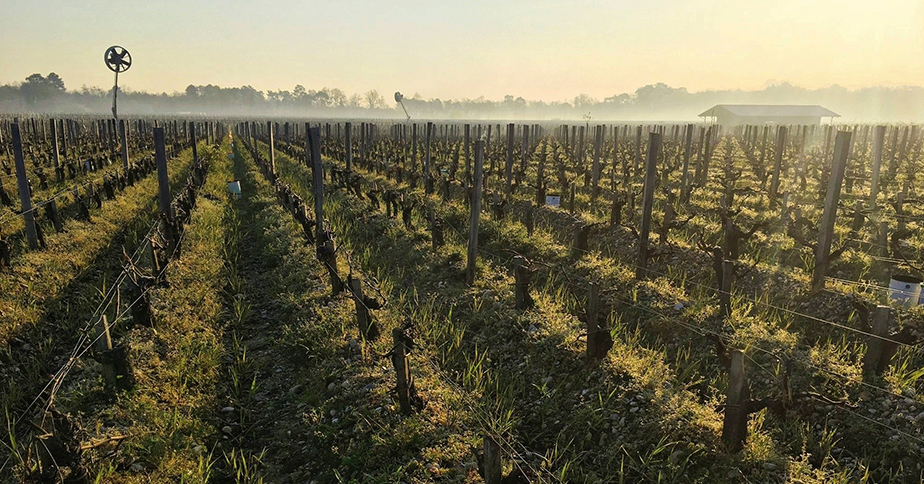
Currently, Estate Palmer boasts 66 hectares of vineyards, situated on a barren gravelly highland formed during the Quaternary Ice Age, overlooking Garonne. The soil, formed by alluvial deposits from Garonne and Dordogne, is high in gravel, poor in quality, and well-drained. The vineyards are planted with 47% Cabernet Sauvignon, 47% Merlot, and 6% Petit Verdot, with an average vine age of 38 years. Adhering to the principles of respecting terroir and sustainable development, the winery began experimenting with biodynamic vineyard management in 2008, and by 2014, all of its vineyards had adopted biodynamic farming methods, obtaining certification in 2017. No pesticides are used in the vineyards. The soil, vines, and other flora and fauna are considered as an interconnected whole, emphasizing biodiversity. Pruning, harvesting, and other processes are conducted at appropriate times according to the changing seasons, striving to cultivate grapes that truly reflect the unique terroir under the most natural conditions.
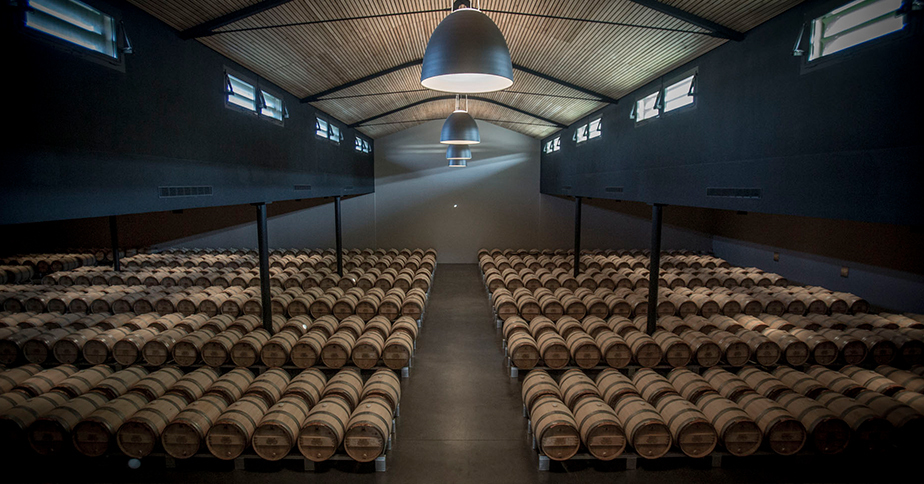
When the grapes reach optimal ripeness, the winery harvests them by hand. After manual and optical sorting, and crushing, the grapes are transported to fermentation tanks by gravity. The winery currently has 54 conical fermentation tanks, allowing for the separate fermentation of grapes from different plots and varieties. After fermentation, the wine matures in oak barrels for 20-22 months, with less than 50% new barrels, to highlight the wine's natural characteristics. A key feature of Palmer Estate is its high proportion of Merlot in its blends. While the Left Bank typically features classic blends dominated by a high proportion of Cabernet Sauvignon, Palmer takes a different approach, often using less than 50% Cabernet Sauvignon, supplemented with a small amount of Petit Verdot. Cabernet Sauvignon brings structure and distinct, deep tannins, Merlot provides rich fruit aromas, a silky smooth texture, and a full range of expression, while Petit Verdot adds complex spice notes.