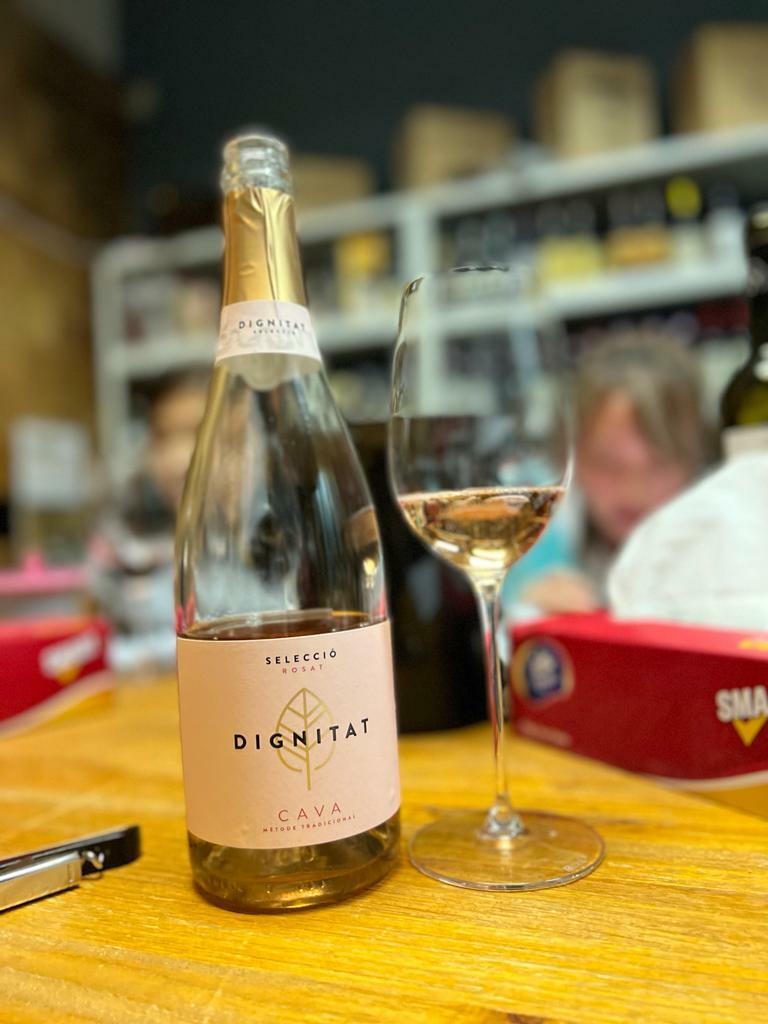
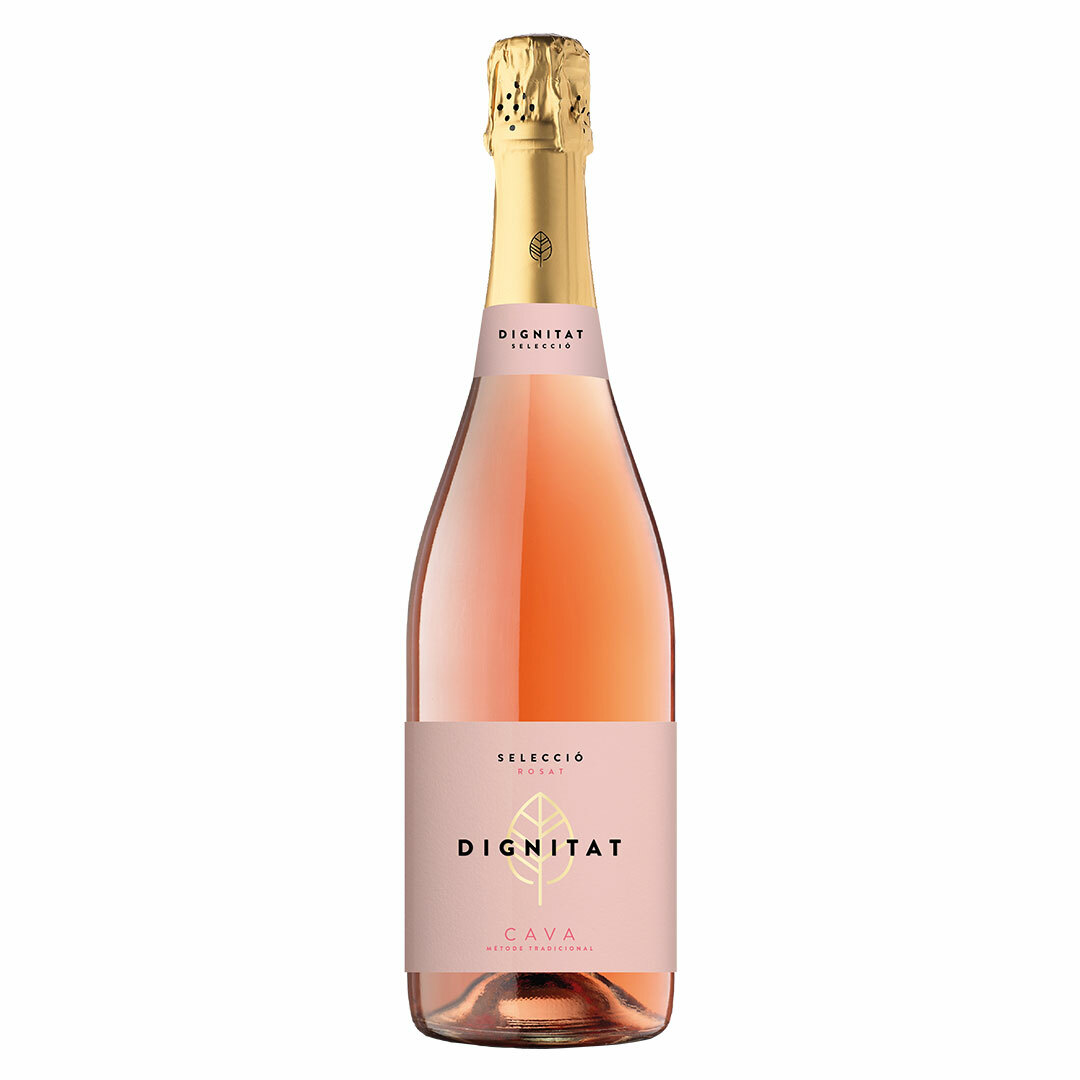
Grape Varieties: Trepat 34%, Garnacha 33%, Monastrell 33%
Sugar: 7 g/L
Aging: Secondary fermentation in bottle for 11 months
Alcohol: 11.5%
Taste: This sparkling wine is delicate with a vibrant pink color. The nose offers fresh, rose-like aromas, followed by flavors of red strawberry and cherry.
Container: 750ml
Single Vineyard: A single vineyard is a carefully selected vineyard that expresses the flavors of the terroir. These vineyards are often meticulously tended, and the resulting grapes are typically higher quality than those from non-single vineyards.
Cava:
Cava is a sparkling wine from Spain's Denominacion de Origen designation of origin, made using the traditional method. It can be either Blanco or Rose (Rosado), using the primary grape varieties Macabeo, Parellada, and Xareló.
The Cava D.O. encompasses over 38,000 hectares of vineyards and over 6,391 winegrowers. Cava originated in the Penedes province of Catalonia (Provinces of Barcelona and Tarragona), with the town of San Sadurni d'Anoia being the most important production center and known as the "Capital of Cava." Cava is also produced in other regions of northern, northeastern, southwestern, and eastern Spain, including Aragon, Castile and León, Extremadura, La Rioja, Navarre, and Valencia. Cava is Spain's top export: over 60% of its wine sales are international. Its 370 wineries are spread across 100 countries. Several countries produce Cava in 2019, using over 320 million kilograms of grapes, producing nearly 250 million bottles.
Origin of the Name:
The name "Cava" derives from the Spanish word "caca," meaning cave or cellar, as caves were used to store and age wine. The name, already used for sparkling wine at the time, was officially adopted by the newly established Sparkling Wine Regulatory Committee in 1972.
Production Process:
Produced according to the Traditional Method (also known as Methode Champenoise or Methode traditionelle), the same method used in Champagne, both Cava and Champagne require a secondary fermentation process.
The first fermentation of the base wine, also known as the alcoholic fermentation, takes place primarily in large, temperature-controlled stainless steel tanks.
Blending the different base wines and adding a blending liqueur (a mixture of yeast and sugar) results in a second fermentation in the same bottle, which is ultimately consumed by the consumer.
Cava requires a minimum of nine months of bottle aging for young Cava de Guarda. Superior: Aged for at least 18 months.
Grape Varieties: Xarello is one of the primary grapes in Cava. Besides Macabeo, Xarello, and Parellada, other varieties are also used, such as Chardonnay, Pinot Noir, and, less commonly, Malvasia. For Cava rosado, the red grape varieties Garnacha, Monastrell, and Trepat are used.