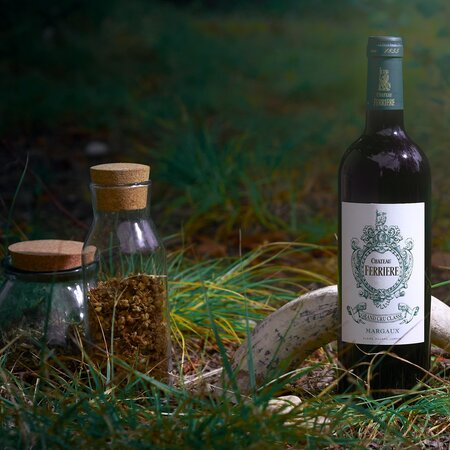
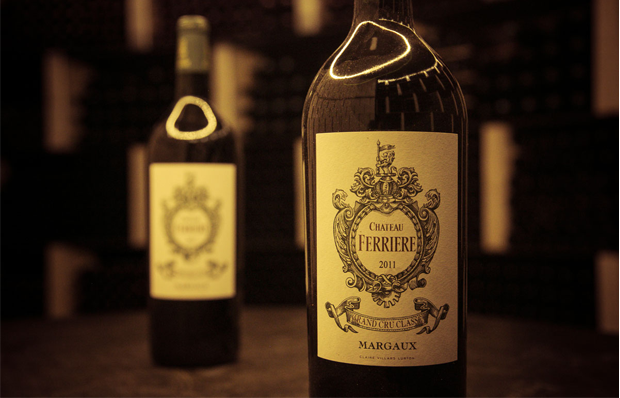
【Rated as a third-class winery in the 1855 classification】
【In 2015, it obtained the Organic Agriculture (Agriculture Biologique) certification, and in 2016 it began to strive for the Biodynamic certification.】
【James Suckling 95 pts】【DECANTER 95 pts】【VIVINO 4.01】
ZTF610F - Chateau Ferriere Margaux 2018Special price $425/bottle
Origin/Grade: France / Bordeaux / Margaux / Grand Cru Classe
Grape Varieties: 61% Cabernet Sauvignon, 31% Merlot, 6% Petit Verdot, 2% Cabernet Franc.
Alcohol content: 13.5%
Palate: The nose reveals red fruits, combining notes of gooseberry and black cherry. The taste is mellow, with spicy notes that blend perfectly with the fruit.
----------------------------------------------------------------------------------------------------------------------------------------------------------------------------
ZTF610E - Chateau Ferriere Margaux 2014 Grand Cru Classe
Price:$320/@
Production area/grade:France / Bordeaux / Margaux/Grand Cru Classe
Grape varieties: 61% Cabernet Sauvignon, 31% Merlot, 6% Petit Verdot 2% Cabernet Franc.
Special aging: 16-18 months French oak barrels (50% new barrels)
Alcohol content: 13.5%
Chateau Ferriere is located in the Margaux (Margaux) production area of Bordeaux, France. It is also a winery with a long history dating back to the 18th century, and was rated as a third growth in the Bordeaux 1855 classification.
In the 18th century, a royal official named Gabriel Ferriere founded a winery and named it after his own surname, which is now Chateau Ferriere (Phili Winery). For more than 100 years since then, the estate has been under the management of the Ferriere family, and it has also developed and grown in their hands, successfully winning the title of third-growth village. In 1913, Armand Feuillerat, the owner of Chateau Marquis de Terme (De Damon Marquis Manor), acquired Chateau Ferriere, and then his daughter Andre Durand inherited the winery. Since 1952, Andre Durand's heirs have leased the winery to Alexis Lichine, then owner of Chateau Lascombes (Lux Gold Castle). At this time, most of the grapes produced by Chateau Ferriere were used to brew Chateau Lascombes (Lux Gold Castle) wine, and the winery itself entered a slow period of development.
In 1988, Chateau Ferriere ushered in a new opportunity for development - Jacques Merlaut, founder of the well-known French wine merchant Taillan Group (Sun Group), bought the winery. In 1992, the lease agreement between Chateau Ferriere and Chateau Lascombes came to an end, and Jacques' daughter Bernadette Villars-Merlaut also released her first vintage. Under the painstaking management of Jacques Merlaut and his descendants, the development of the winery has gradually improved. In addition to Chateau Ferrier, Jacques Merlaut and his descendants also own Chateau Chasse-Spleen, Chateau La Gurgue and Chateau Haut-Bages Liberal. Chateau) these well-known wineries.
Chateau Ferriere, Margaux, France is the winery's signature wine, made from organically grown grapes. The wine exudes aromas of blackberry and graphite, with a rich taste, freshness and vitality at the same time. In addition, the winery also produced two second-brand wines, namely, La Dame de Ferriere, Margaux, France and Les Remparts de Ferriere second-brand dry red wine. , Margaux, France)
In terms of vineyard management, the winery team firmly believes that people are also part of the terroir. They take good care of every vine and go all out to protect the ecological environment in the garden. The winery promotes organic and biodynamic planting. While maintaining the sustainable development of the vineyard, it also maximizes the potential of the terroir, bringing more delicate taste and depth to the wine. It is worth mentioning that the winery obtained the Organic Agriculture (Agriculture Biologique) certification in 2015, and began to strive for biodynamic certification in 2016.
In 2013, Fabien Pedelaborde, a famous Bordeaux architect, carried out a complete renovation of the Ferrier estate. The renovated wine cellar houses 22 concrete fermentation tanks of different capacities and adjustable temperature. The winery will choose different fermentation containers according to the differences of grapes. After fermentation, the liquor used to brew the grand vin will be aged for 18-24 months in French oak barrels with a proportion of 40% new barrels. During the first and second years of aging, the wine is placed in two different cellars. During this period, the temperature of the two wine cellars was kept between 14-16°C, and the humidity was kept at about 80%, providing a stable aging environment for the wine. After aging, the winery clarifies the wine with egg whites before bottling.


 Q
Q