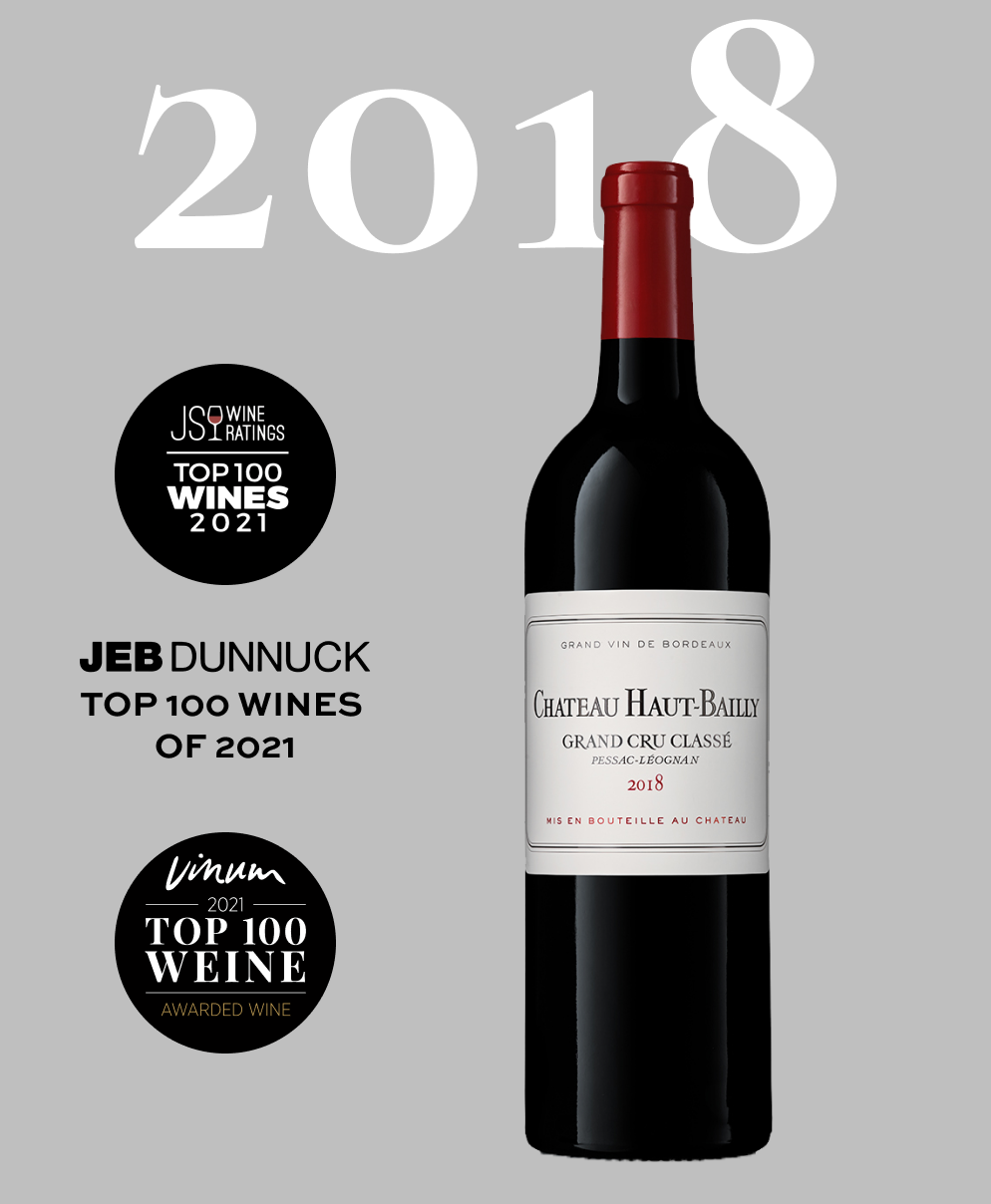
The 2018 Haut-Bailly soars out of the glass, showing magnificent poise that only grows withtime. Sweet, perfumed aromafics, silky tannins and mid-weight structure add to itsconsiderable allure. Ripe red berry fruit, spice, blood orange, licorice, cedar, tobacco andmenthol are all woven together in an effortless, classy Haut-Bailly that delivers the goods. lsuppose the 2018 doesn't quite have the explosive energy of the very best years, but it morethan makes up for that with its sensual, seductive personality.
The 2018 Haut-Bailly is blended of 55% Cabernet Sauvignon, 35% Merlot, 5% Petit Verdot and 5% Cabernet Franc, and it has 14.4% alcohol. Deep garnet-purple colored, it needs a little coaxing to unlock a powerhouse of black fruit preserves, offering notes of blackberry pie, crème de cassis and black cherry compote, giving way to nuances of Chinese five spice, camphor, chocolate box and licorice with a touch of crushed rocks. The medium to full-bodied palate is jam-packed with plush textured, rich black fruits, supported by a lively backbone and finishing long and spicy. It is decadently tempting to drink now, but give it 5 years in bottle to begin to see its full glory, while it should continue to transform for a further 20 years or more in cellar.

Château Haut-Bailly is a historic wine estate located in Pessac-Léognan on the left bank of the Gironde River. Half a century ago, its Cabernet Sauvignon-based wines often commanded the same price as Premier Growths, and the estate was awarded Grand Cru status in the 1959 Graves Classification. Its wines remain highly regarded and frequently receive rave reviews.
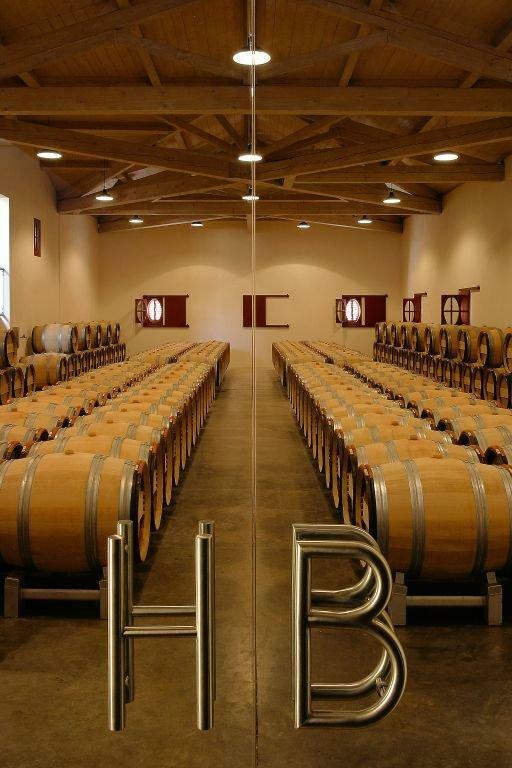
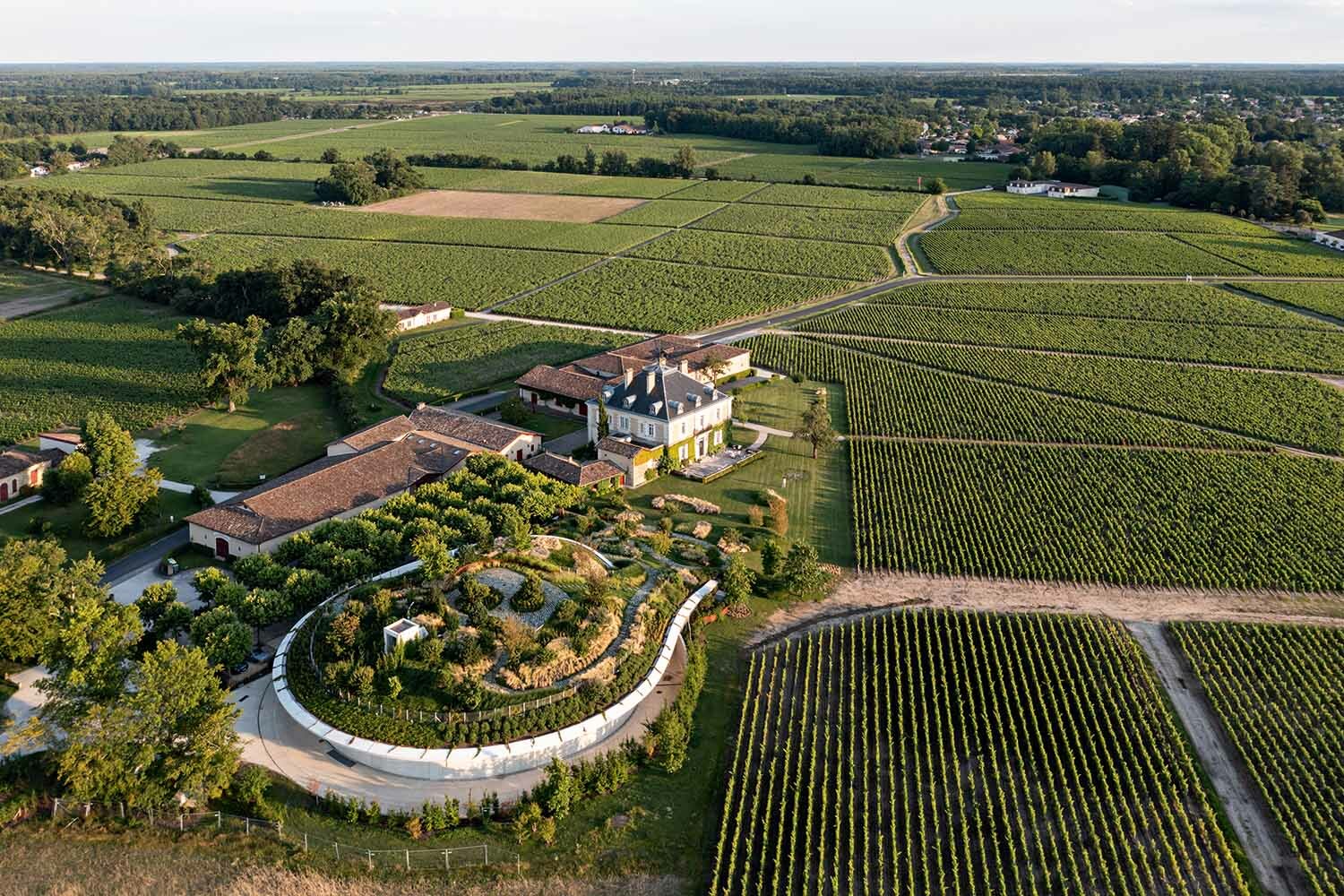
The estate boasts 30 hectares (74 acres) of vineyards nestled on a high, sandy ridge, rich in sandstone and fossils. Cabernet Sauvignon makes up the majority of the vineyard, but Merlot, Cabernet Franc, and Petit Verdot are also planted. After fermentation, Château Haut-Bailly grand vin is aged for 16 months in oak barrels, with the proportion of new oak depending on the vintage. In addition to the grand vin, the estate also produces a second wine, La Parde de Haut-Bailly, and a rosé. Unusually for the Pessac-Léognan estate, no white wine is produced. The vineyard's foundations date back to the 16th century, when the estate was owned by the Goyaneche and Daitze families. In 1630, it was sold to the Bailly and Lauvarde families, who invested in building a manor house and cultivating the surrounding land. Before his death in 1655, Bailly named the wine produced at the estate after himself.
In 1998, the Wilmers family, an American banker, purchased Haut-Bailly and entrusted full management to Veronique Sanders, granddaughter of the original owner. By the 2000s, Haut-Bailly's quality had reached a remarkable level. With most of its equipment replaced with more modern, precision winemaking equipment, 2004 marked a major turning point for the estate. From that vintage onward, Haut-Bailly's performance was reborn, catapulting it to the top of the Graves region. Not only did it receive Parker ratings of 95 points for two consecutive years in 2005 and 2006, but in 2008, it even achieved a Parker score of 96, the highest in Passec-Léognan, alongside Haut-Brion, one of the five major estates in the same village. Haut-Bailly regained its former glory and once again took its place at the top of Passec-Léognan's elite wineries.