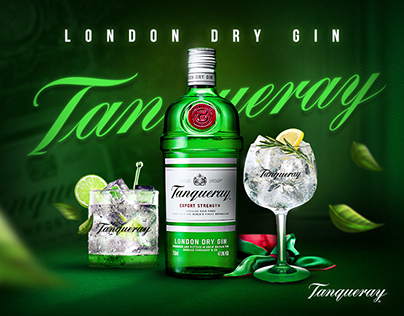
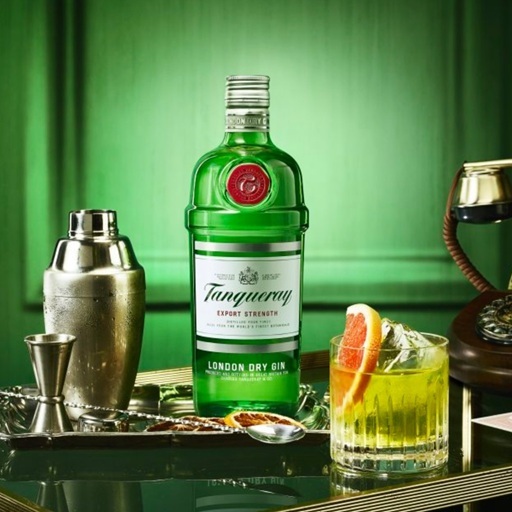
Tanqueray London Dry was one of the first London Dry Gins launched in the 1830s.
Tanqueray was voted the best-selling and most popular spirit in a poll of the World's 50 Best Bars, published in the annual report of the World's 50 Best Bars 2016 by Drinks International magazine.
Tanqueray London Dry has won numerous international awards, including a double gold medal at the San Francisco World Spirits Competition.

ZUK002 - Tanqueray London Dry Gin 750ml
Price $195/pc
Production area / Grade: London, UK
Alcohol content: 47.3 per cent
Volume: 750ml
Through four distillations, a perfect match is made between the crop and the spirit, preserving the nuances of the flavours of the ingredients. Rich and pronounced aromas of juniper berries, angelica, citrus peel, lavender and violets, with a hint of lemon, richly layered; smooth, well-balanced spice flavours.
Tanqueray Gin was founded in London in the early 19th century, and in 2016 it replaced Beefeater and has grown to become one of the world's best-selling brands of felicitous spirits.
In the early 19th century, the industrial revolution led to the popularity of distilleries. As the population grew, so did the demand for cheaper alcohol. At the same time, reforms in distillation technology allowed the production of distilled spirits to increase exponentially. Charles Tanqueray saw the opportunity and founded the Tanqueray Distillery in Bloomsbury, London in 1830.
Born in 1810, Charles' father, grandfather and great-uncle were all ministers in a parish outside London, but rather than follow the missionary path, Charles chose to forge his own path, travelling to the distillery with his brother Edward to learn the trade and how to become a felted wine distiller. By then, felted wine had moved on from being a bad drink, so when the Addley brothers entered the gin business in 1830, it was just in time. At first the young distillery specialised in exports, mainly to the then British colony of Jamaica.
After the death of founder Charles in 1865, the company was taken over by Charles Waugh Tanqueray. As there were many felt distilleries in London at the time, in order to survive, Charles Waugh orchestrated the merger of Alexander Gordon & Co and Charles Tanqueray & Co in 1898 to form the largest felt distillery in the world." When the companies merged, Gordon's became the premier felted wine in England and Tanqueray was introduced to the United States, thus adding to the popularity of the liqueur in the United States. Today, Tanqueray is the leading felted wine brand of Diageo, the international spirits group.
Although Charles went into the distilling business with his brother and took over the Goswell road distillery in 1835, Edward died only a few years later, and the invention of the continuous distillation apparatus in 1832 helped Charles to develop the London Dry Felt spirit. As a result, Charles Addley was one of the first to create what came to be known as ‘London Dry’, which was the opposite of the Old Tom style that was popular at the time. Early Old Tom felts required the addition of large amounts of sugar to cover the flaws in the distillation process, as the distillation technology of the time was unable to create a very pure base spirit. After starting the family business, Charles achieved success using just four botanicals, which are the most important parts of today's additive recipe: juniper, angelica root, liquorice and coriander seed.