{{ 'fb_in_app_browser_popup.desc' | translate }} {{ 'fb_in_app_browser_popup.copy_link' | translate }}
{{ 'in_app_browser_popup.desc' | translate }}
{{word('consent_desc')}} {{word('read_more')}}
{{setting.description}}
{{ childProduct.title_translations | translateModel }}
{{ getChildVariationShorthand(childProduct.child_variation) }}
{{ getSelectedItemDetail(selectedChildProduct, item).childProductName }} x {{ selectedChildProduct.quantity || 1 }}
{{ getSelectedItemDetail(selectedChildProduct, item).childVariationName }}
Domaine Vincent Girardin - Famous White Wine expert in Burgundy
Winery adopt Biodynamic long time ago
Buy 6 bottles Alcoholic product Free Delivery Fee (Hong Kong) on selected categories
$1200 or above order free delivery (Hong Kong) on order
Buy Together and Save More (At most {{ addItemQuantity }} item(s))
Not enough stock.
Your item was not added to your cart.
Not enough stock.
Please adjust your quantity.
{{'products.quick_cart.out_of_number_hint'| translate}}
{{'product.preorder_limit.hint'| translate}}
Limit {{ product.max_order_quantity }} per order.
Only {{ quantityOfStock }} item(s) left.

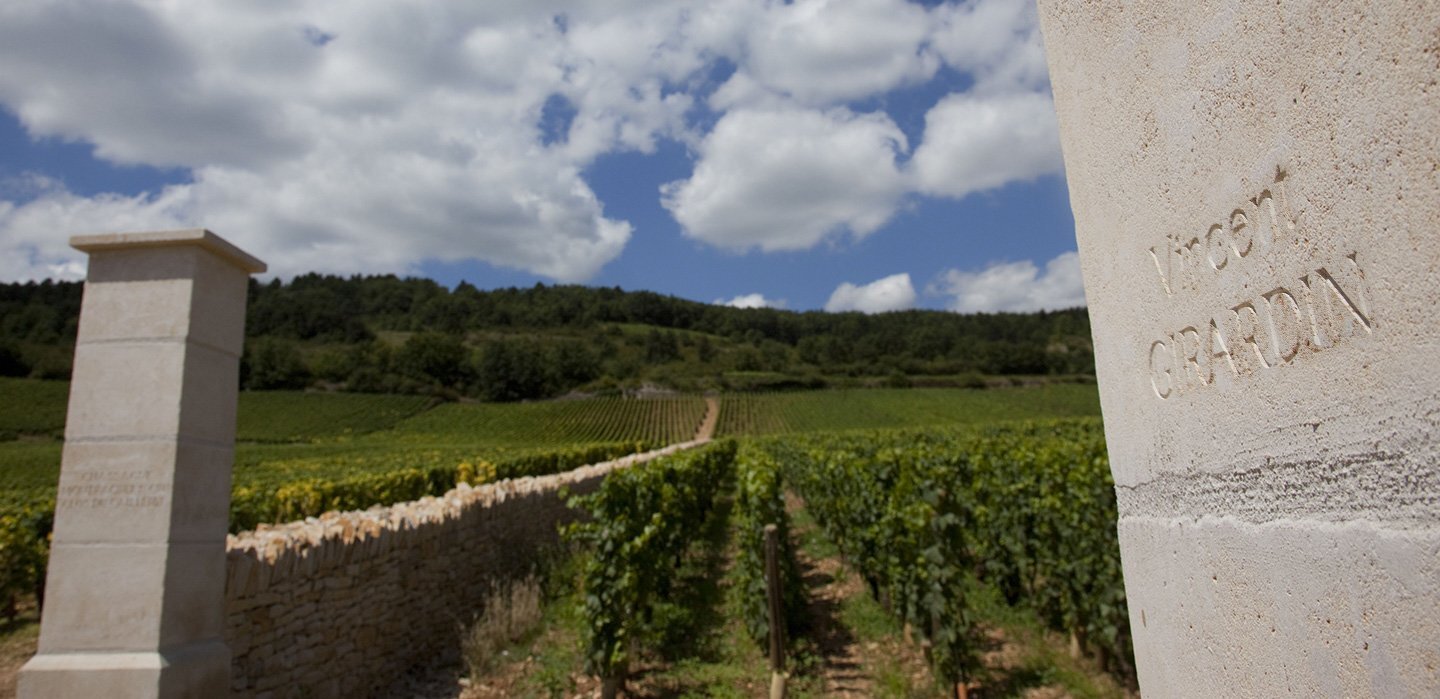
Domaine Vincent Girardin started with two hectares of vineyards in 1980 and has grown into one of Burgundy's largest wine merchants. The winery now manages 14 hectares of its own vineyards and purchases grapes from an additional 70 hectares of vineyards across various Burgundy appellations, primarily producing white wines.
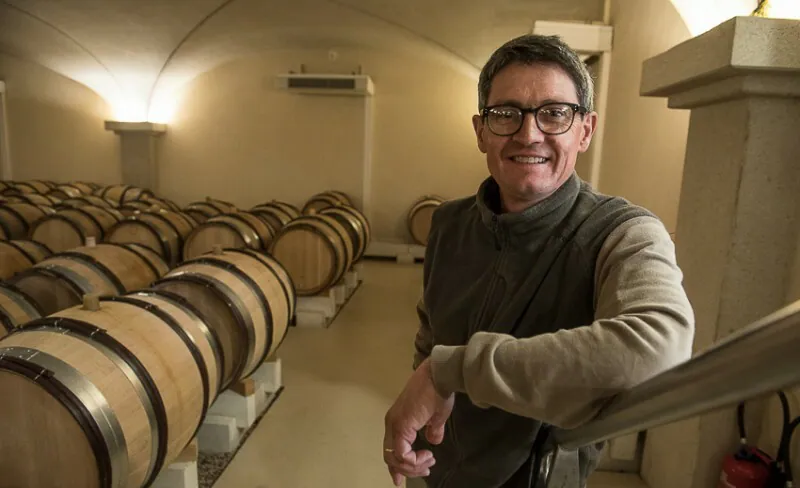
Vincent Girardin's family has been growing grapes in Santenay, Burgundy since the 17th century. In 1980, at the age of nineteen, Vincent inherited two hectares of vineyards from his family, thus beginning his wine business. In 2002, Eric Germain, a winemaker who champions natural methods, joined the winery, and the style of the wines began to change, emphasizing the expression of local terroir and naturalness, with a reduced use of new oak barrels. Eric stated, "Barrels are like salt; they are used to enhance the flavor of the wine, not to mask its terroir." In 2005, Eric became the chief winemaker.

In 2007, the winery changed its labels to white with black lettering, adopting a clean and simple style. Since 2009, the company has implemented biodynamic farming methods, with 90% of its products organically grown. Grapes are hand-harvested, low-pressure pressed, and fermented at low temperatures using natural yeasts. Wines are bottled according to the Biodynamic Lunar Calendar. Biodynamic farming requires understanding the workings of the universe, utilizing the Earth's gravity, constellation movements, natural climate, and rainfall every year, month, and hour to determine the farming cycle. Bottled on "Root Day," the wine's aging potential is enhanced.
In 2012, Vincent Girardin's health deteriorated, and his children were unwilling to take over the winery. Vincent was forced to sell off the vineyards in Puligny-Montrachet 1er cru "Les Referts," Les Folatieres, and the village of Puligny-Montrachet. Ultimately, the winery retained only one hectare of vineyards, which continued to be managed by winemaker Eric. Because controlling the quality of a one-hectare vineyard was difficult, in late 2014, the winery acquired four hectares of vineyards in Meursault-Charles, Meursault-Narvaux, Sous la Velle, Pommard-Vaumuriens, and the village of Volnay, and also purchased grapes from grape growers for winemaking. In the following two years, the winery returned to normalcy, acquiring another ten hectares of vineyards, gradually becoming one of the largest wine merchants in Burgundy.

Vincent Girardin now uses biodynamic methods, avoiding herbicides and pesticides, but employing organic copper and sulfur. They regularly deep-plow and use natural compost, and utilize high trellises for better photosynthesis and ventilation. Grape harvesting is done manually, with an initial selection process in the vineyard followed by further removal of substandard grapes in the workshop. The winemaking process differs for red and white wines. White wine is lightly pressed, clarified at low temperatures, and then fermented in oak barrels (using local yeasts) for 14 to 20 months, retaining fine lees in the oak and bottled without clarification. Red wine is partially destemmed and naturally fermented in temperature-controlled stainless steel tanks, with pump-over and light cap pressing to extract more flavor. After filtration, it is transferred to oak barrels (10 to 30% new) for 16 to 18 months, using traditional gravity-driven shaking during the process, and bottled without clarification or filtration. Baijiu (Chinese white liquor) is characterized by its refined style and exceptional aromatic purity, offering a rich, smooth, and fresh experience; while red wine is primarily characterized by its graceful smoothness, delicate elegance.