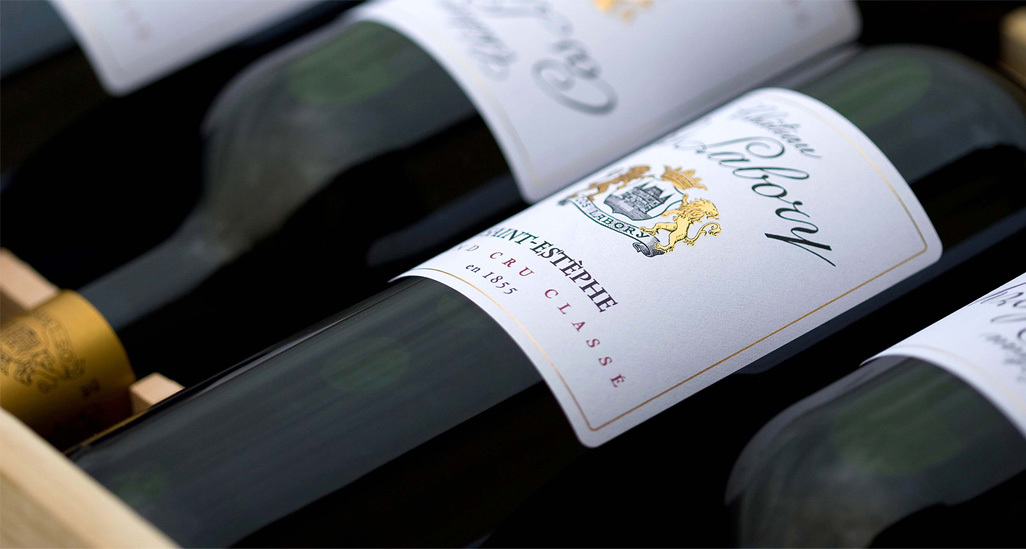
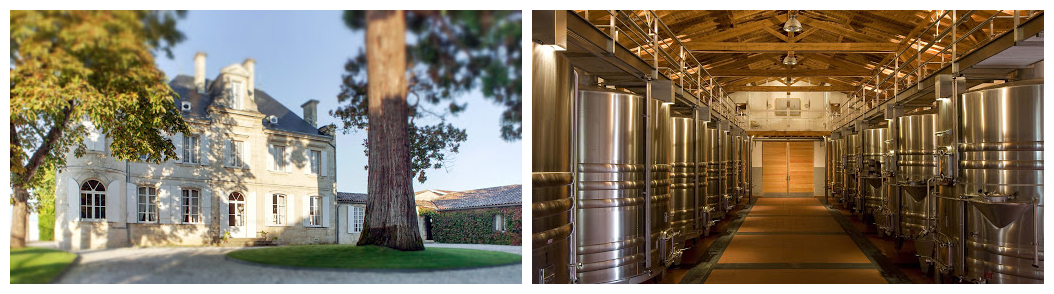
【A fifth-growth Bordeaux estate in France】
【Saint-Estephe Grand Cru Classes】
【The estate is adjacent to the renowned Lafite-Rothschild & Cos d'Estournel】

【Wine Advocate 92 pts】【Vinous 92 pts】
【James Suckling 90 pts】【Vivino 4.0】
ZTF943C - Chateau Cos Labory 2016 Saint Estephe
Price:$350/bottle
Production Area/Grade: France/Saint-Estephe Grand Cru Classes
Grape variety: 60% Cabernet Sauvignon, 35% Merlot,5%Cabernet Franc
Alcohol: 13.5%
Volume: 750ml
Taste:The 2016 Chateau Cos Labory is described as a bold, complex, and elegant wine with aromas and flavors of dark fruit (cassis, blackberry, blackcurrant), spice, and savory herbs, balanced by a fresh acidity and fine, silky tannins. It has a rich, concentrated, and long finish with notes of cedar, toasted oak, and sometimes black soil or licorice.
Wine Advocate 92 pts—
Deep garnet-purple colored, the 2016 Cos Labory opens with cassis, plums and herbs with notions of black soil and pencil lead. The medium-bodied palate is elegant and fresh with fine-grained tannins and nice purity, finishing long.
Vinous 92 pts—
The 2016 Cos Labory is a supple, pretty wine with plenty of near andmedium-term appeal. Sweet tobacco, cedar, leather, scorched earth andmenthol are all nicely laced together. From bottle, the 20l6 is a bit moresubdued than it was from barrel, while some slightly rough contours aregoing to need time in bottle to sort themselves out fully.
James Suckling 90 pts—
Plenty of plum and smoke on this rather broad St.-Estèphe and there’s just enough character and structure to hold it on track. Soft finish.
--------------------------------------------------------------------------------------------------------------
【Wine Advocate 93 pts】【Vinous 93 pts】【James Suckling 92 pts】
【Wine Enthusiast 92 pts】【Decanter 92 pts】【Jeb Dunnuck 90 pts】【VIVINO4.1】
ZTF943B - Chateau Cos Labory 2018 Saint Estephe
Price:$350/bottle
Production Area/Grade: France/Saint-Estephe Grand Cru Classes
Grape variety: 46% Cabernet sauvignon, 44% Merlot, 10% Petit verdot
Average tree age: 35 years, some vines up to 50 years old
Recommended drinking temperature: 18-20 degrees
Alcohol Concentration: 14%
Features: Fully hand-picked grapes, fermentation takes about 20 to 25 days, then aged at 30 to 50 percent in new barrels for 12 to 15 months before bottling.
A fifth-class Bordeaux winery, France, the winery is adjacent to the famous Chateau Lafite-Rothschild and Chateau Cos d'Estournel, superior geographical location.The soil is mainly Quaternary gravel, the subsoil is marl limestone, good drainage, very suitable for grape growth. The vineyard terroir system determines the innate conditions of grape quality, on the geographical location of the winery.
--------------------------------------------------------------------------------------------------------------
【James Suckling 91 pts】【Decanter 91 pts】
【Wine Advocate 90 pts】【Vivino 4.0】
ZTF943D Chateau Cos Labory Saint Estephe 2017
Price:$320/bottle
Production Area/Grade: France/Saint-Estephe Grand Cru Classes
Grape variety: 57% Cabernet Sauvignon, 38% Merlot, 5% Petit Verdot
Alcohol Concentration: 13%
Volume: 750ml
【James Suckling 91】
Sweet tobacco and currants with cedar undertones here. It’s medium-bodied with a solid core of polished tannins and a long, flavorful finish. Shows focus and solidness.
【Decanter 91】
Not giving too much away on the nose, it's austere and closed on the attack but it opens up well, and will age. Fleshy cassis and brambled hedgerow fruits come through from the mid palate, and all is held together by firm slightly rustic tannins. Old school but good, from a lovely property that often flies under the radar.
【Wine Advocate 90】
The 2017 Cos Labory is medium to deep garnet-purple colored and very fragrant and floral with red and black fruits, some spices and earth plus a waft of herbs. The palate is medium-bodied, soft, fine-grained and juicy with good expression and length.
【Winery Introduction】
Chateau Cos-Labory, located in the Saint-Estèphe appellation on the left bank of Bordeaux, enjoys a prime location, adjacent to Chateau Lafite-Rothschild and Chateau Cos d'Estournel.
The estate was originally named Cos-Gaston, after the Gaston family who lived in the area. The owner at the time was Pierre Gaston, under whose management the estate flourished. In August 1777, Pierre Gaston passed away, and the estate passed to his son, Hyacinthe. Hyacinthe managed the estate for many years thereafter. Later, he passed the winery to his only child, Marie Sany. After Marie Sany married Francois-Armand Labory, the estate passed to the Labory family. At that time, the winery was very prestigious, with an annual wine production of 81,000 liters, comparable to many of the large wineries in the Médoc at that time.
After Francois's death, none of his eight children inherited the winery. In 1847, the winery fell into the hands of Louis-Gaspard d'Estournel, the owner of Chateau Cos d'Estournel, and five years later it was acquired by the British banker Charles Cecil Martyns. During Charles's management, the winery was classified as a Fifth Growth in 1855. The winery subsequently changed hands frequently until 1922 when it was acquired by Ambrosio and Augusto Weber, ancestors of the current owners.
Château Cos-Labory currently has 18 hectares of vineyards with an average vine age of 35 years, and many vines are over 50 years old. The planting density is 8,700 vines per hectare. The vineyard soils are predominantly sandy clay, ideal for Cabernet Sauvignon and Cabernet Franc, which account for 55% and 10% of the planted area, respectively. In addition, 33% Merlot and 2% Petit Verdot are also planted. Grapes are harvested either by hand or by machine after ripening. Hand-harvested grapes are sorted in the vineyard, while machine-harvested grapes are sorted in the cellar. After destemming and pressing, they are transferred to stainless steel fermentation tanks. All the large tanks are equipped with temperature control systems, installed in 1999. The grapes undergo a short-term cryo-maceration at 10°C, followed by fermentation at 28°C with added yeast. The maceration period lasts 3-4 weeks, with two pump-overs and two treads daily, followed by malolactic fermentation at approximately 20°C–21°C. Finally, the wine is aged for 14-15 months in 40-50% new oak barrels. The estate's flagship wine has an annual production of approximately 7,000 cases, and the second label approximately 3,300 cases. The flagship wine is typically a beautiful ruby red color with exquisite aromas and oak flavors, making it very elegant.