{{ 'fb_in_app_browser_popup.desc' | translate }} {{ 'fb_in_app_browser_popup.copy_link' | translate }}
{{ 'in_app_browser_popup.desc' | translate }}
{{ childProduct.title_translations | translateModel }}
{{ getChildVariationShorthand(childProduct.child_variation) }}
{{ getSelectedItemDetail(selectedChildProduct, item).childProductName }} x {{ selectedChildProduct.quantity || 1 }}
{{ getSelectedItemDetail(selectedChildProduct, item).childVariationName }}
Chablis location and climate
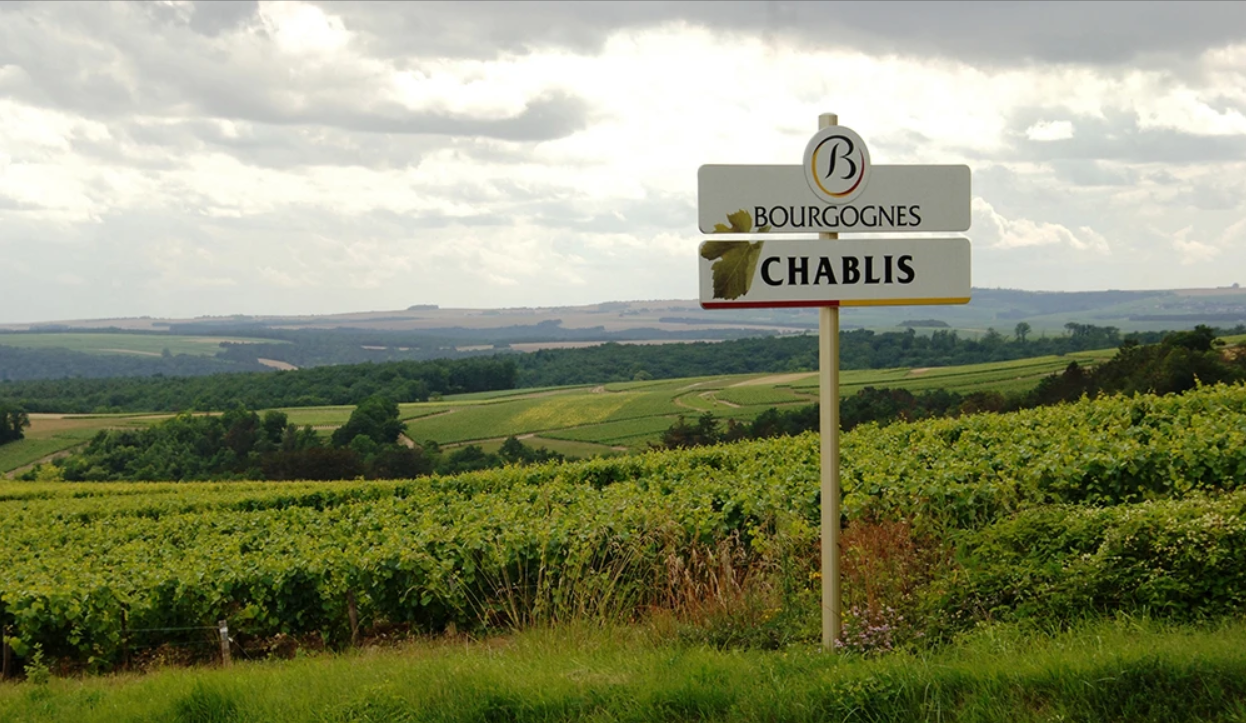
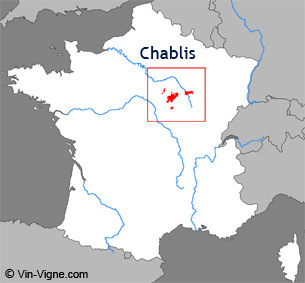
The Chablis wine region is located at the northernmost tip of Burgundy in France. It is famous for producing traditional dry white wine. Chardonnay is the only legal grape variety for Chablis. Geographically close to the Champagne region, Chablis has a continental climate with cold weather and short, mild summers. And susceptible to frost, Chablis wines in this climate are often high in acidity and low in sugar.
The local Chardonnay is unique: it is dry with butter, nuts and mineral flavors, and has a refreshing taste. It is completely different from Chardonnay wines produced around the world, and has a unique and fascinating style!
Chablis Chablis classification system
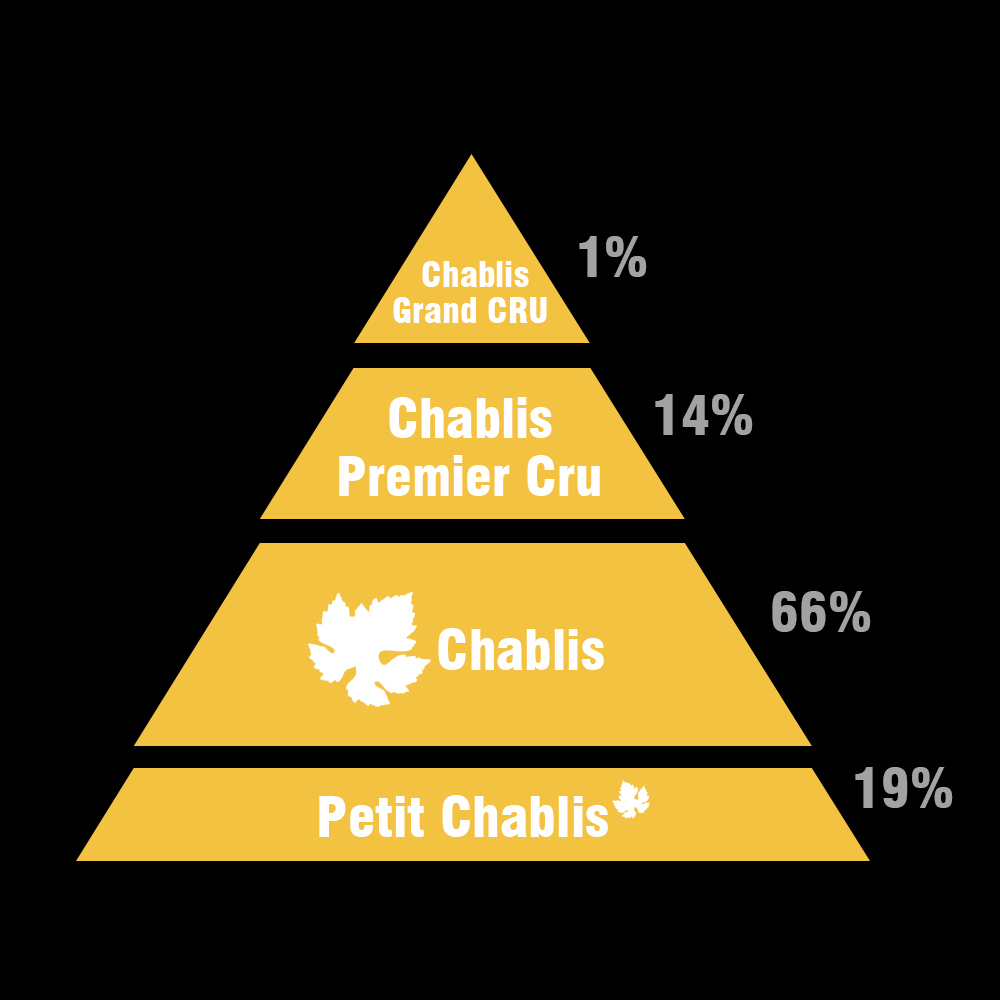
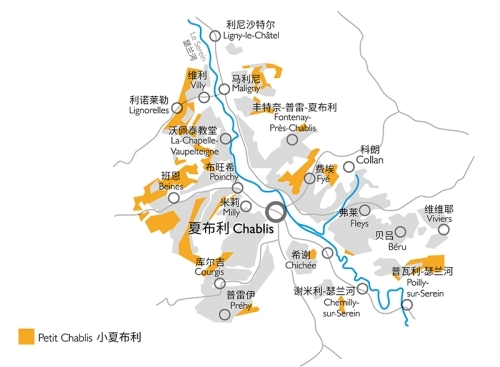
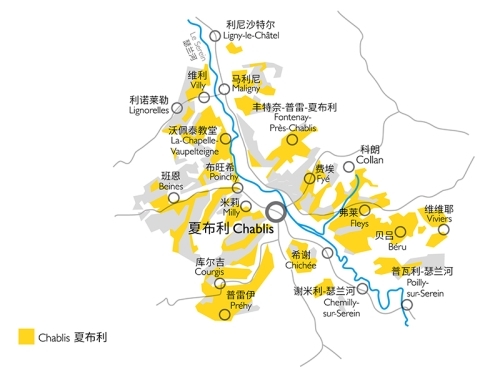
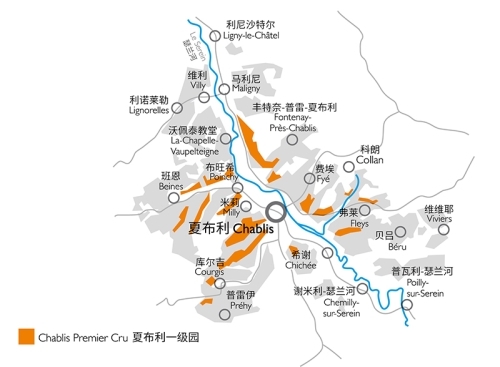
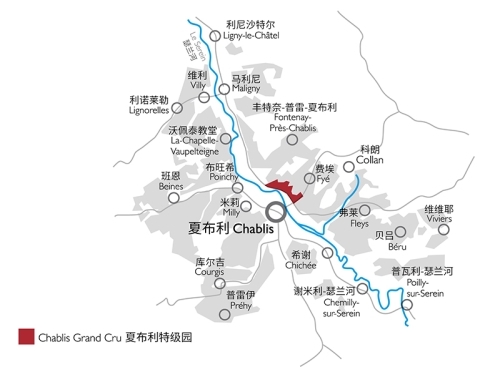
Burgundy is different from another well-known Bordeaux. Local producers have a unique understanding of the land, and they classify plots/vineyards by terroir. Chablis , which belongs to Burgundy, is no exception. In 1938, the French Appellation of Origin (INAO) officially classified Chablis as an independent AOC legal area, and established a corresponding classification system, dividing the wines produced in Chablis into 4 grades, from low to high The order is Petit Chablis, Chablis, Chablis Premier Cru and Chablis Grand Cru.
1. Petit Chablis
The output of Petit Chablis wine accounts for about 18% of the total wine production in the Chablis producing area, which belongs to the local entry-level wine. These wines are clear, light yellow, sometimes greenish in color, and the aromas are dominated by white flowers such as hawthorn and acacia, as well as citrus fruits such as lemon and grapefruit. Light and crisp on the palate, this wine is very lively, with fresh acidity balanced by a rounded mouthfeel, with occasional hints of savory character from the soil. Generally speaking, the flavor of Petit Chablis is relatively simple, with few changes, and it is suitable for drinking in a young state. It usually enters the drinking period two years after the grapes are harvested.
2. Chablis
This level of wine can be produced in several towns in the Chablis region, with a vast distribution of vineyards, with a total area of up to 3,630 hectares, and wine production accounts for about 66% of the total wine production in the entire region. “Unlike Petit Chablis, Chablis is a wine that is recognizable because of its refreshing mineral aroma. In addition, mint, green apple, licorice and freshly cut straw are fresh and refreshing. Bright aromas are also revealed.Chablis wines are persistent in the mouth, turn golden in color with age, and develop spice notes.
3. Chablis Premier Cru
There are 40 first-class vineyards in Chablis, which are located on the hillside along the Serin River and its tributaries. The wine production accounts for 15% of the total output of the production area. These premier vineyards usually have slight differences in soil, orientation and microclimate, so the wines produced also show a variety of styles.
Although Chablis Premier Cru wines are imprinted with the characteristics of each garden, these wines also have some things in common. For example, compared with Petit Chablis and Chablis, the wines of Premier Cru will not emit unrestrained aroma immediately after opening the bottle, but need a brief contact with the air to release the aroma slowly and long. When young, these wines generally exhibit mineral or floral aromas, which develop more refined, subtle and complex aromas with age. With a persistent flavor lingering in the mouth and excellent structure, these wines have excellent aging potential for 5-10 years.
4. Chablis Grand Cru
The grand crus is the highest level of Chablis wine, with a vineyard area of about 101 hectares, and wine production only accounts for 1% of the total production. The Grand Cru of Chablis is subdivided into 7 plots, namely Blanchot, Bougros, Les Clos, Grenouilles, Preuses, Valmur ) and Vaudesir. Most of these plots are located on south-facing slopes with an altitude of 100-250 meters. Not only can they avoid the strong westerly wind, but they are also not easily affected by frost. With superior light and drainage conditions, the grapes can reach ideal maturity.
Chablis grand cru wine is crystal clear, golden-green in color, and turns pale yellow after aging. Mineral flavors of flint are very strong in the aroma, and wild mushroom is also one of the typical aromas, while honey and nuts are intertwined. This type of wine has both refreshing vitality and full-bodied taste, and fully interprets the distinctive personality of the Grand Cru. In addition, as the top wines of Chablis, most of them can be aged for 10-15 years, or even longer.
Chablis soils and wine styles
There are two important soils in the Chablis area: Kimmeridgian soils and Portlandian soils.
Kimmeridgian soils
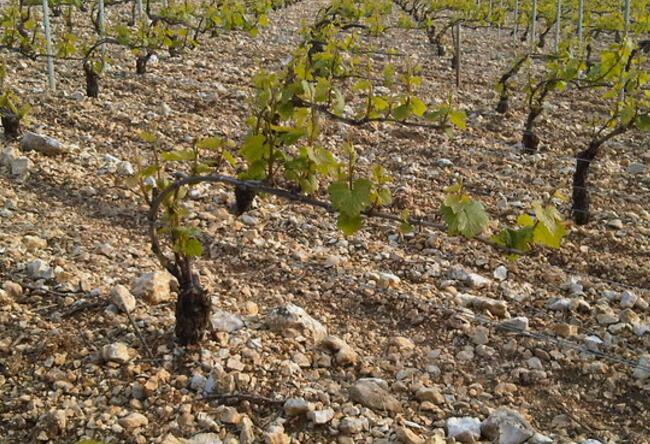
Kimmeridgian soil was formed in the Jurassic period. It is a stacked limestone and marl layer formed by layers of marine organisms deposited in ancient times. It is rich in marine fossils such as nautilus, oysters, and sea urchins. The rock is soft and easily broken. Cracked and well water-retaining, this calcareous soil rich in shell fossils gives Chablis wines a rich mineral flavor. In 1923, the French government began to emphasize the importance of the Kimmeridgian soil, and had legislated that only wine made from grapes from the Kimmeridgian soil could be called Chablis.
Portlandian soils
In addition to the Kimmeridgian soil in the Chablis production area, the more widely distributed Portlandian (Portlandian) limestone soil is also an important soil in the production area. Geological experts have concluded that the differences between the two soils are actually quite large. Tiny, France has also legislated that only wines made from grapes in Portlandian soil can only be called Petit Chablis. Finally, the French Appellation Standards Institute (INAO) believes that in addition to emphasizing the importance of soil, the influence of microclimate and hillside orientation should also be taken into account. As a result, the total area of Chablis vineyards has tripled and several new Premier Crus have been added.
The lime content of the local soil is extremely high, so the wine has a prominent mineral taste, which tastes like slightly salty mineral water, or it smells like the flint in a lighter (Flint), a pungent mineral Flavor and prominent acidity are the characteristics of Chablis.
Chablis famous winery
Domaine Francois Raveneau
Jean et Sebastian Dauvissat
William Fevre
Guy Robin et fils
Domaine Jean Marc Brocard
Chablis Food Pairing
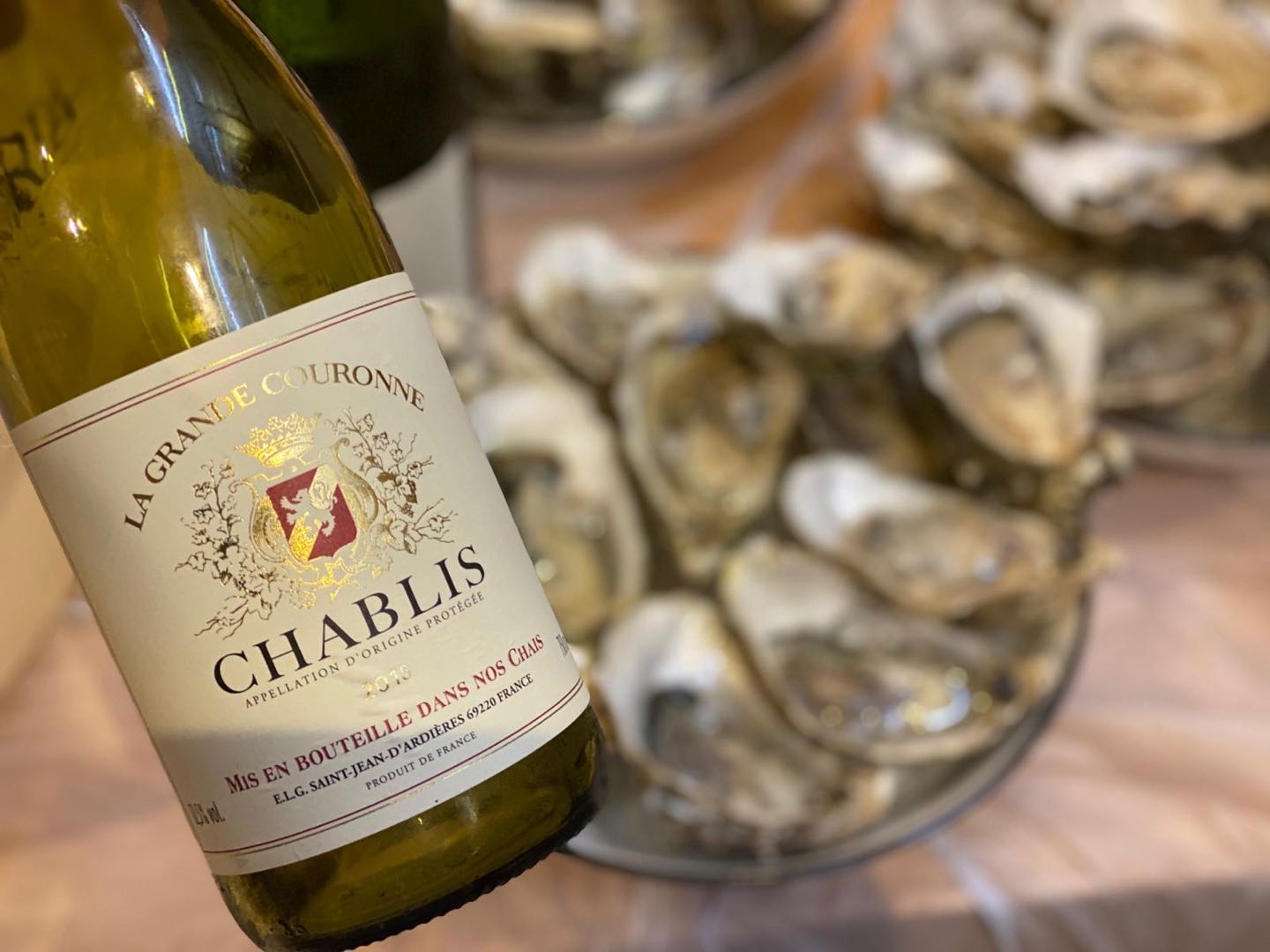
Mineral oysters and refreshing Chablis are a classic pairing. However, different grades of Chablis wines have different styles and should be treated separately when serving wine and food. For example, wines from some premier or grand cru gardens are not suitable for pairing with fresh oysters, because the wine is usually aged in oak barrels and has a creamy flavor that will produce fishy smells with the umami in oysters. However, dishes with creamy sauces (for example: pasta carbonara, creamy chicken and cabbage stew) are quite suitable.
How do oysters pair with wine?
The pairing of oysters and wine is the same as that of most table wines. The balance between the two needs to be considered. The richness of the flavor of the oysters should be in harmony with the body of the wine. The combination of the two will enhance the taste.
The "acidity" and "salty" in wine and food can "sublime" each other
Acidity and salty have the characteristics of suppressing the bitterness and fishy smell in food. The natural salty taste of seawater in oysters, paired with wine with high acidity, is just like adding lemon juice. In addition to suppressing the fishy smell in raw oysters, it can further It highlights the freshness and sweetness of the oysters, and at the same time, it can make the wine more sweet when drinking.
When eating raw oysters, if paired with red wine, the tannins in the wine will appear extraordinarily bitter, and even accentuate the mineral taste similar to metal, while the relatively strong fruity aroma of red wine will also cover up the umami taste of oysters. Chance tricks the palate into a blood-like illusion.
You can use rosé wine instead of red wine, or if you really want to pair it with red wine, choose a wine with high acidity and low tannin, such as French Beaujolais.
Chablis wine:
Chablis